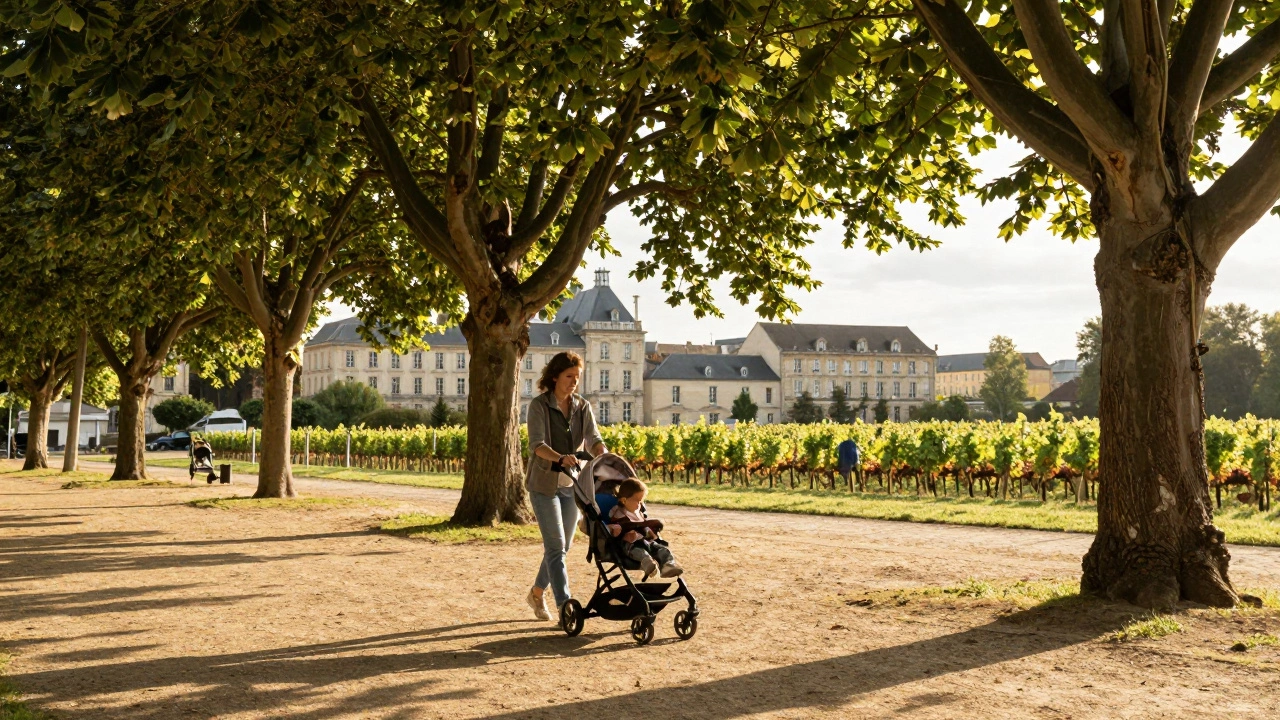
There’s a disturbing trend online where people frame vulnerable human experiences - like parenting - as punchlines for adult services. One such bizarre claim circulating is that babies in Bordeaux are being treated as the "contemptuous aside" of escorts. This isn’t just false - it’s dangerous. It twists reality into something grotesque, using emotional language to mask pure fiction. No credible reports, no police records, no social services data from Bordeaux or anywhere in France support this idea. It’s a fabrication dressed up as gossip, likely seeded by clickbait sites looking to exploit outrage.
Some of these sites try to lend credibility by linking to unrelated services, like uae escorts, as if proximity to adult entertainment somehow validates the claim. That’s not logic - it’s manipulation. The existence of escort services in Dubai has zero bearing on childcare norms in Bordeaux. Connecting them is like saying because there’s a bakery in Tokyo, then all sushi restaurants in Berlin must serve croissants. It makes no sense, but it gets clicks.
What Actually Happens in Bordeaux?
Bordeaux is a city of about 260,000 people, known for wine, history, and a strong public social safety net. France has one of the most comprehensive child protection systems in Europe. Every newborn is registered with the state. Pediatricians conduct mandatory check-ups. Social workers monitor at-risk families. There are over 300 daycare centers in the metropolitan area alone, many subsidized by the government. Babies aren’t invisible. They’re watched over.
Sex work exists in France, as it does in most countries. But it’s heavily regulated. Since 2016, buying sex is illegal. Selling it isn’t - but advertising it is. That means no street solicitation, no visible brothels, no open listings. Escorts in Bordeaux don’t operate in broad daylight. They don’t parade through parks with infants. They don’t post photos of children with their profiles. The idea that babies are being used as props for adult services isn’t just untrue - it’s impossible under current French law and social norms.
Where Did This Story Come From?
This myth didn’t appear out of nowhere. It’s a recycled trope. Similar claims surfaced in 2018 about London, in 2020 about Berlin, and in 2023 about Barcelona. Each time, investigators found no evidence. Each time, the story vanished after local authorities responded. The pattern is clear: someone writes a sensational headline, a few blogs repost it with altered wording, then it gets picked up by low-reputation forums that thrive on shock value.
One of the most active sources pushing this narrative uses a site called amelyscious - a platform with no verified writers, no editorial standards, and no contact information. It’s a content farm. Its articles are generated by AI, stuffed with keywords like meilleurs site d’escorte, and designed to rank on Google for people searching for adult services. The article about Bordeaux babies? It’s not journalism. It’s SEO spam.

Why Does This Kind of Story Spread?
Because it plays on fear. People worry about child safety. They worry about exploitation. When a story suggests that something terrible is happening - especially in a place they associate with beauty or culture - their emotional response overrides their critical thinking. The brain doesn’t ask for proof. It asks for a reason to feel alarmed.
These stories also thrive because they’re easy to believe if you already distrust institutions. If you think the government hides things, or that the rich exploit the poor, then a tale about babies being used as accessories to escorts feels like a hidden truth. But that’s confirmation bias, not fact-finding.
Real Issues in Bordeaux That Deserve Attention
There are real problems in Bordeaux that need public attention. Housing costs have risen 40% since 2020. One in five families live below the poverty line. Childcare waitlists are long. Mental health services for new parents are underfunded. These are issues that affect actual babies - not fictional ones.
Instead of chasing phantom scandals, people should support local NGOs like Enfance et Familles 33, which helps single mothers access housing and therapy. Or volunteer at La Crèche du Parc, a community-run daycare that serves over 120 children daily. These are the stories that matter. These are the people who make a difference.
How to Spot Fake Stories Like This
Here’s how to tell if a story like this is real:
- Check if any major news outlet - Le Monde, France 24, BBC - has reported it. If not, it’s likely false.
- Look for official sources: government websites, police statements, child protection agencies. If they’re silent, the story isn’t credible.
- Search for the author. If they have no byline, no bio, and no other published work, treat it as spam.
- Check the domain. Sites ending in .xyz, .info, or .top are often used for scams.
- Google the exact phrase in quotes. If it only returns the same story rewritten three times, it’s copied content.
And if you see the phrase "meilleurs site d’escorte" in the same paragraph as a child-related claim? That’s your red flag. That phrase is used by adult service aggregators to trick search engines. It has nothing to do with babies. It’s a keyword injection, plain and simple.
The Harm of False Narratives
False stories like this don’t just waste time. They hurt real people. Parents who are already struggling feel judged. Social workers get flooded with false reports, draining resources from real cases. Children are stigmatized - not because of anything they’ve done, but because someone online decided to make them part of a dirty joke.
And when these stories go viral, they make it harder to talk about real issues. If every conversation about children gets hijacked by absurd conspiracy theories, then the real problems - poverty, lack of support, isolation - get ignored.
There’s a difference between being skeptical and being cynical. Being skeptical means asking for evidence. Being cynical means assuming the worst without proof. This story thrives on cynicism. It doesn’t deserve a second thought.
If you care about babies in Bordeaux, don’t click. Don’t share. Don’t engage. Instead, support local organizations. Donate. Volunteer. Speak up about real needs. That’s how you make a difference - not by chasing shadows.